
|
|
||||||||||
Have You Ever Used a Data Center? You Probably Have.
Data centers power AI, banking, streaming, websites, smartphones, and much more.
Keywords:
data centers, facility, online services, power
consumption, water usage
Key Takeaway:
You probably use data centers every day
without even realizing it.
Category Insights:
AI SERIES — AI is rapidly changing how we work, learn, and interact with
technology.
Intro
It is a pretty safe bet that you've used a data center. In fact, you probably use data centers every day without even realizing it.
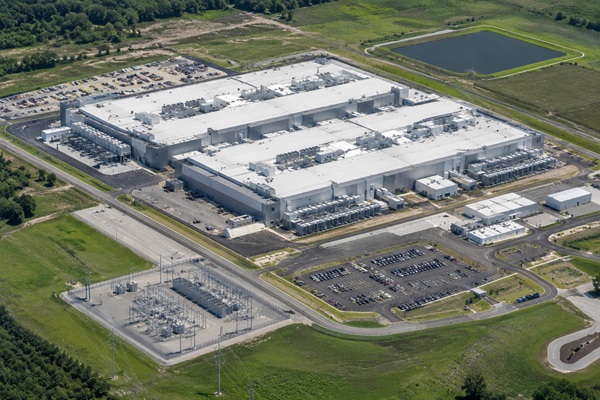
Most people have never seen the inside of a large data center. These facilities can contain thousands of computers, storage devices, networking equipment, cooling systems, backup power systems, and other infrastructure. Together, they provide the computing power and storage behind many of the online services we use every day.
Data centers have also become a controversial topic. Communities considering new facilities may have questions about electricity consumption, water usage, noise, construction, traffic, environmental effects, utility infrastructure, and the number of permanent jobs a facility will create.
Those concerns are being discussed at the same time that society is becoming increasingly dependent on data centers.
As consumers, we are using data centers more than ever.
Unless you live completely off the grid and avoid virtually all modern online services, you have almost certainly used a data center. You may never have walked into one, but your computer, smartphone, television, banking app, and many of the websites you visit depend on them.
Banking and Financial Services
When you check your bank balance online, transfer money, deposit a check with your phone, or use a credit card, data centers are involved.
Banks and financial companies operate large computer systems that process transactions and store financial information. Even something as simple as paying for groceries with a credit or debit card can involve several computer systems communicating with each other within seconds.
Online Databases
Data centers store and process enormous amounts of information. There are online databases for businesses, schools, libraries, medical organizations, government agencies, research institutions, and countless other organizations.
Whenever you look something up online, there is a good chance that a computer somewhere in a data center is helping provide the information.
Website Hosting
Websites need computers to store their files and deliver them to visitors. Most websites are hosted on servers located in data centers.
When you visit a website, your request may travel to a data center hundreds or even thousands of miles away. The server processes the request and sends the necessary information back to your computer or smartphone.
This applies to business websites, online stores, news sites, blogs, forums, government websites, and countless other online services.
Online Backups and Cloud Storage
Cloud storage is another major example. Services such as OneDrive, Google Drive, Dropbox, and online backup services allow people and businesses to store files somewhere other than their own computers.
When you back up your computer or smartphone to the cloud, your photos, documents, videos, and other files are being stored on servers in data centers.
The term "cloud" can make this sound less physical than it really is. Cloud computing still requires physical computers, storage devices, networking equipment, buildings, electricity, and cooling systems.
Government Services
Government agencies rely heavily on computer systems and data centers. Tax information, Social Security records, court records, public databases, and many other government services require large amounts of computer storage and processing power.
Federal, state, and local agencies also use computer networks to communicate and share information. Government computing requirements cover everything from public websites and online forms to large databases containing sensitive information.
Search Engines
Search engines such as Google, Bing, and Yahoo process enormous amounts of information.
When you type a question into a search engine, you are not searching the entire internet directly from your computer. Your request is sent to computer systems that locate and organize information before sending the results back to you, often in a fraction of a second.
The search engines themselves also maintain enormous databases containing information about websites and other online content.
Streaming Services
Do you watch Netflix, Amazon Prime Video, YouTube, or another streaming service? If so, you are using data centers.
Movies, television programs, music, and videos require enormous amounts of storage and network bandwidth. Data centers make it possible to store this content and deliver it to millions of people.
Streaming also requires networks of servers and other equipment to help deliver content efficiently. Large services may distribute copies of popular content to different locations so users do not all have to connect to one central server.
Social Media
Social media platforms such as Facebook, Instagram, and YouTube depend on data centers to store photos, videos, messages, posts, and other information.
Consider how much information is uploaded every minute. Every photo, video, comment, and message has to be stored and processed somewhere.
Social media companies also need computing power to deliver content to users, manage accounts, perform searches, recommend content, detect certain types of activity, and provide other services.
Online Gaming
Online gaming is another major use of data center infrastructure. PC, Mac, Linux, console, and mobile games can communicate with remote servers to handle multiplayer games, player accounts, game statistics, updates, downloads, and other services.
Even games that run primarily on your own computer may connect to remote servers for authentication, updates, cloud saves, matchmaking, or other features.
Smartphones and Mobile Apps
Today's smartphones are essentially small computers connected to enormous computer networks. Many of the apps on an iPhone or Android phone communicate with remote servers.
Email, maps, weather, banking, shopping, social media, photo storage, artificial intelligence, and countless other apps may depend on data centers to function.
In many cases, the smartphone is simply the device used to access a service. The actual data processing and storage can happen somewhere else.
Home Security Systems
Modern security cameras have also become part of the data center ecosystem. Internet-connected systems can use remote servers to store video, provide remote access, send notifications, and allow users to view their cameras from almost anywhere.
When a security camera sends a notification to your smartphone because it detected movement, there may be several computer systems and networks involved in processing and delivering that notification.
Scientific Research
Data centers and high-performance computing systems are important to scientific research. Weather forecasting, astronomy, medical research, genetics, engineering, space exploration, and many other fields require large amounts of computing power.
Scientists use computers to process information that would be extremely difficult or impossible to analyze manually.
Weather models, for example, can process information from satellites, weather stations, aircraft, radar, and other sources to help predict future conditions.
Law Enforcement and Public Safety
Law enforcement agencies increasingly depend on computer databases and connected systems. License plate readers, traffic cameras, red-light cameras, fingerprint databases, DNA databases, criminal records, and other digital systems all require computers and storage.
Some systems can collect and process information from large numbers of cameras and other sensors. These technologies can provide law enforcement with information that was difficult or impossible to collect at the same scale in the past.
They also raise questions about privacy, data retention, access to information, and how collected data is used. Those issues are separate from the technology itself but have become part of the broader discussion surrounding large-scale data collection.
Artificial Intelligence and Data Centers
One of the most important and controversial uses of data centers today is artificial intelligence (AI).
When you use an AI service such as ChatGPT, Microsoft Copilot, Google Gemini, or another AI system, the work is generally performed using remote computing infrastructure. Your request is sent over the internet to powerful computers, where it is processed before the response is sent back to you.
AI systems can require substantial computing resources. Training a large AI model can involve thousands of specialized processors working together for extended periods. After a model has been trained, additional computing resources are required every time users interact with it.
AI systems can generate text, images, audio, video, computer code, and other information. They can also analyze documents, assist with scientific research, process large datasets, and perform other computational tasks.
The rapid growth of AI has increased demand for specialized computer processors, servers, networking equipment, storage, and data center capacity.
AI is also changing the type of hardware used in some data centers. Traditional computer processors are still important, but many AI workloads use specialized processors such as graphics processing units, or GPUs, because they can perform certain types of calculations efficiently.
This additional computing demand has brought increased attention to the electricity and cooling requirements of AI data centers.
Why Do Data Centers Use So Much Electricity?
Data centers are essentially large collections of computers that operate continuously. Servers consume electricity while processing information, and storage and networking equipment also require power.
Electricity is also needed for cooling. Computer equipment produces heat, and that heat must be removed to keep the equipment operating within safe temperature ranges.
The amount of electricity used varies considerably depending on the size and design of a facility, the type of computing equipment it contains, how efficiently it operates, and how heavily it is being used.
AI facilities can have particularly high power requirements because specialized processors can consume significant amounts of electricity when operating at large scale.
Why Do Some Data Centers Use Water?
Cooling is one of the more complicated aspects of data center design. Some facilities use air-based cooling systems, while others use water or other cooling technologies.
Water can be used to transfer heat away from computer equipment and, in some systems, can be part of an evaporative cooling process.
Water usage varies significantly between facilities. Factors include the local climate, the cooling system being used, the design of the facility, and how much computing equipment is operating inside it.
This is one reason water consumption has become part of discussions about where new data centers should be located.
Why Are Data Centers Becoming More Controversial?
Data centers are not a new technology, but their size and computing requirements have changed significantly. The growth of cloud computing, streaming, online services, and especially artificial intelligence has increased demand for computing infrastructure.
When a large data center is proposed, communities may have questions about several different issues. These can include electricity consumption, water usage, noise, construction traffic, land use, environmental effects, utility infrastructure, tax incentives, and employment.
The answers can vary considerably from one project to another. A small data center and a large AI-focused facility can have very different requirements.
The location also matters. Electricity generation, transmission capacity, water availability, climate, existing industrial infrastructure, and local regulations can all influence how a data center is designed and operated.
The Data Center Debate
There are legitimate facts on both sides of the data center discussion.
Data centers provide the computing infrastructure behind many services that people and businesses use every day. Banking, websites, cloud storage, streaming, social media, scientific research, government services, smartphones, online gaming, and artificial intelligence all depend on computer infrastructure.
At the same time, data centers require physical resources. They need buildings, land, computers, electricity, networking equipment, cooling systems, and other infrastructure. Large facilities can have significant local requirements, particularly when they are designed for high-performance computing or AI.
This has led to questions about how data centers should be planned and regulated. Some of the questions include how much electricity and water a facility should use, where it should be located, how additional infrastructure should be funded, what effect it will have on local utility systems, and what economic benefits it will bring to the surrounding community.
These are questions that can have different answers depending on the specific project and the needs of the community where it is located.
We Are All Using Data Centers
It is easy to think of a data center as something that belongs to a technology company and has little connection to everyday life. In reality, data centers have become part of the infrastructure behind modern society.
Every time you stream a movie, check your bank account, search Google, back up your photos, visit a website, use a smartphone app, play an online game, access a government service, or ask an AI system a question, there is a good chance a data center is involved.
You may never see the data center processing your request. It may be hundreds or thousands of miles away. But the computers inside that facility are helping provide the services you use.
The growth of artificial intelligence has made data centers an even more important topic. As computing demand increases, questions about electricity, water, infrastructure, land use, economics, privacy, and environmental impact will continue to be part of the discussion.
Whether you support or oppose a particular data center project ultimately depends on the facts surrounding that specific project. The important thing is understanding what data centers do, what resources they require, and how heavily modern society has come to depend on them.
You may not have a data center in your backyard, but there is a very good chance you have used one today.
Amazon Links - These are products we recommend
Meyer Computer is an Amazon Affiliate. We may earn a small commission from qualifying
purchases made through the links below.
Thank you for supporting us!
- PNY 32GB Attaché X USB 3.2 Gen 1 Flash Drive 5-Pack
- SANDISK 32GB 3-Pack Ultra USB 3.0 Flash Drive
- SANDISK 64GB 2-Pack Ultra USB 3.0 Flash Drive
- UGREEN 30W USB C Charger - Black
- UGREEN 30W USB C Charger - White
- Anker Charger, 65W 3-Port Fast Compact Foldable USB C Charger Block